
Why Is My St. Augustine Grass Turning Brown? It Might Be Chinch Bugs
Quick Answer
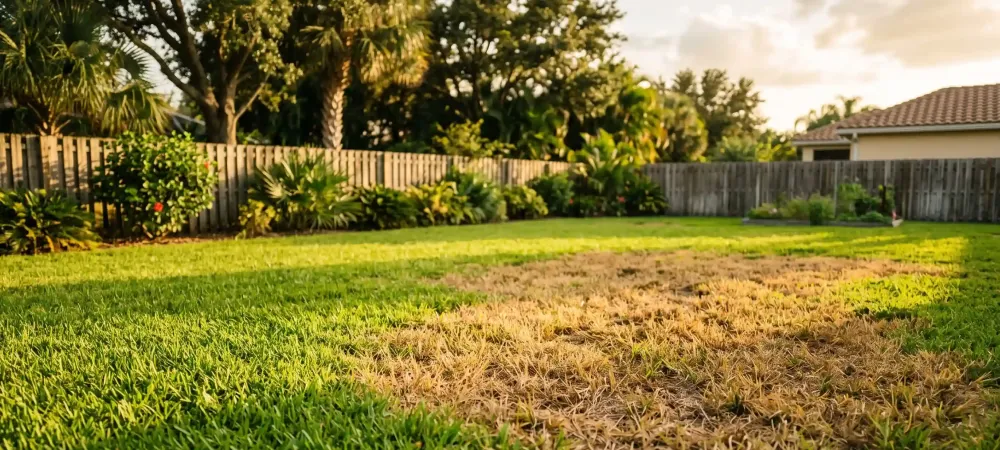
Brown, dry-looking patches in St. Augustine grass that don't respond to extra watering are often caused by southern chinch bugs, tiny sap-sucking insects that are the most damaging turf pest in Florida. Unlike drought stress, chinch bug damage keeps spreading even after you water the lawn, and it usually starts in the sunniest, driest part of your yard. Catching an infestation early, before it spreads across the whole lawn, is the difference between a quick treatment and a full resod.
What Chinch Bugs Are and Why Florida Lawns Are So Vulnerable
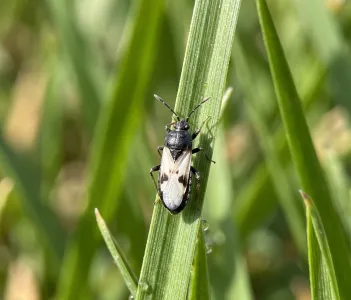
Southern chinch bugs are small insects, only about a fifth of an inch long at full size, that feed by draining sap from grass blades until the grass withers and dies. The University of Florida's Institute of Food and Agricultural Sciences (UF/IFAS) identifies the southern chinch bug as the most damaging turfgrass insect pest in the state, noting that St. Augustinegrass is the most widely planted turfgrass species in Florida lawns, covering more than 2 million acres. That combination, Florida's favorite grass and its most destructive insect, is exactly why chinch bugs show up so often in Central Florida yards.
Young chinch bugs are orange with a white stripe across their back, and they grow into black, winged adults with orange legs, still barely the size of a grain of rice even at maturity. Their small size is part of the problem: most homeowners never actually see the bugs themselves, only the damage they leave behind. Chinch bugs are most active in warm weather but can cause damage year-round in Central Florida, since the region rarely gets cold enough to slow them down for long.
How to Tell Chinch Bug Damage From Drought Stress
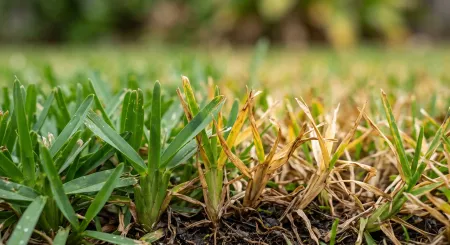
The most common mistake homeowners make is assuming a brown patch means the lawn just needs more water. Chinch bug damage looks similar to drought stress at first glance; both cause yellowing and browning, but the two behave very differently once you start watering. Drought-stressed grass typically perks back up within a day or two of good irrigation. Grass damaged by chinch bugs stays brown and keeps spreading regardless of how much water it gets, because the insects are actively feeding on the blades faster than the grass can recover.
Chinch bug damage tends to start in the sunniest, driest section of the yard, often near a sidewalk, driveway, or south-facing area, and spreads outward in an irregular pattern rather than a uniform patch. If you kneel down at the border between the dead and living grass, you may be able to spot the tiny black-and-white adults or orange nymphs moving through the thatch layer. A simple way to confirm what you're seeing: part the grass at the edge of a brown patch and look closely for a few minutes. If the damage is spreading and watering isn't helping, chinch bugs are worth ruling out before you assume it's a watering problem.
What to Do If You Suspect a Chinch Bug Infestation
Confirm the pest before treating it. It's tempting to reach for a pesticide the moment you see brown grass, but treating the wrong problem wastes money and delays the actual fix. A simple way homeowners can check for themselves is with a coffee can test: cut both ends off a large can, press it a couple of inches into the soil at the edge of a damaged area, fill it with water, and watch for chinch bugs floating to the surface within a few minutes.
Rule out beneficial insects first. Not every small bug in your lawn is working against you. Big-eyed bugs look similar to chinch bugs at a glance, but they actually prey on chinch bugs and help keep populations down naturally. Confusing the two and treating your whole lawn can wipe out the insects that were doing you a favor.
Get a professional opinion once damage spreads. Once an infestation covers more than a small test patch, or keeps returning season after season, calling in a professional makes more sense than repeated DIY attempts. Chinch bugs have grown resistant to many common insecticides over the years, which means the right product and the right timing matter more than they used to.
Treatment Options: Cultural, Biological, and Chemical Approaches
Homeowners generally have three paths available once chinch bugs are confirmed, and the right one depends on how far the damage has spread. Cultural controls, meaning changes to watering, mowing, and fertilizing habits, work best as prevention or for very early, minor damage, since they reduce the stressed conditions chinch bugs prefer, but won't eliminate an established infestation on their own. Biological control leans on natural predators like big-eyed bugs, which is a slower approach but supports a healthier lawn ecosystem over time and pairs well with cultural changes. Chemical treatment becomes necessary once damage is spreading or covers a meaningful portion of the yard, but timing and product rotation matter: because chinch bugs have developed resistance to several common insecticides, using the same product repeatedly often stops working. Rotating between different modes of action and applying at the right point in the chinch bug's life cycle is where a licensed lawn care technician typically gets better results than a homeowner buying whatever is on the shelf that week.
For most Central Florida yards, a combination approach works best: tightening up watering and mowing habits to remove the stress chinch bugs exploit, while treating an active, spreading infestation with a professionally applied and properly rotated insecticide.
Preventing Chinch Bugs Before They Start
A few ongoing habits make St. Augustine grass a much less attractive target for chinch bugs in the first place:
- Water deeply but infrequently, rather than a little every day, since chinch bugs prefer hot, dry, stressed turf
- Mow at the recommended height for St. Augustine grass instead of scalping it short, since shorter grass is more vulnerable to sun and heat stress
- Avoid over-fertilizing with nitrogen, since lush, tender growth from excess nitrogen actually attracts chinch bugs rather than protecting against them
- Dethatch periodically, since a thick thatch layer gives chinch bugs a place to hide and lay eggs undisturbed
- Walk your lawn regularly, especially in the sunniest areas, so you catch early yellowing before it becomes a spreading dead patch
When to Call Bush Home Services
A small, contained patch of chinch bug damage is sometimes manageable with adjusted watering and mowing habits, but once the damage spreads beyond a small test area, keeps coming back season after season, or covers a noticeable portion of your yard, it's time to bring in a professional. Bush Home Services includes Insect Control as part of both the Bahia grass and St. Augustine grass service packages, applied each spring and fall, which covers chinch bugs along with other common Central Florida lawn pests. A trained technician can confirm the infestation, choose a treatment that hasn't already lost effectiveness in your area, and time the application for the best results, something that's much harder to get right with a single trip to the hardware store.
Get Your Lawn Back Before the Damage Spreads
Brown patches that don't respond to watering are worth a closer look before they take over the whole yard. Chinch bugs move fast in Central Florida's warm climate, and the earlier an infestation gets caught, the smaller and cheaper the fix. If you're seeing spreading brown patches in your St. Augustine grass, or just want a lawn care team who knows what to look for, call Bush Home Services at 352-621-7700 and we'll help you figure out what's going on.
Sources
- "Chinch Bugs." Gardening Solutions, University of Florida Institute of Food and Agricultural Sciences, gardeningsolutions.ifas.ufl.edu/care/pests-and-diseases/pests/chinch-bugs/.