
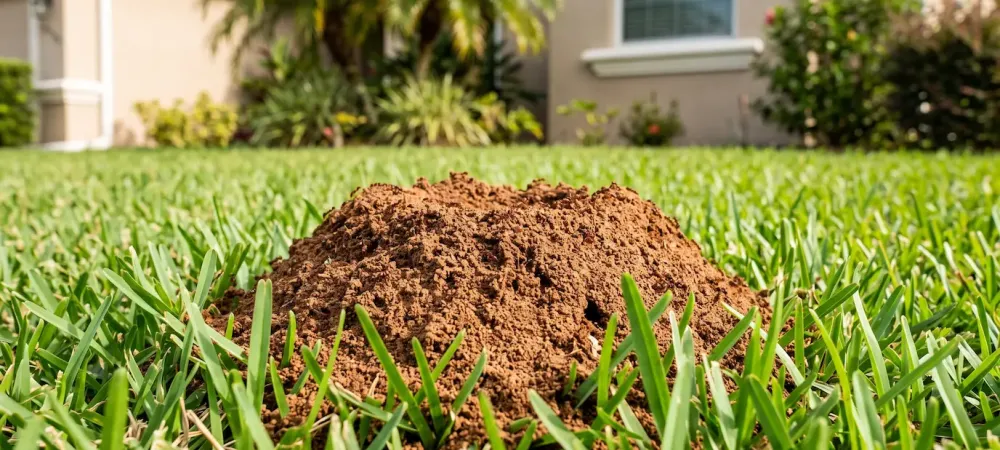
Why Are There So Many Fire Ants in My Central Florida Yard?
Quick Answer
Central Florida's sandy soil, warm climate, and multi-queen colonies are why fire ant mounds keep coming back, and why treating just the mound you can see rarely solves the problem for good.
Fire ants show up in nearly every Central Florida yard because the region hands them everything they need to thrive: sandy, well-drained soil, warm temperatures almost year-round, and open, sunny lawns with few natural predators to hold colonies back. A single quarter-acre lot can carry a dozen or more active mounds at once, and mowing over one just scatters angry ants without slowing the colony down.
Why Central Florida Soil and Climate Favor Fire Ants
Central Florida's sandy soil drains fast and warms quickly, which is exactly the kind of ground fire ants prefer for building mounds. Winters here rarely get cold enough to kill off a colony, so populations that would die back in northern climates keep growing through the entire year instead. Newly graded lots, irrigated lawns, and open pasture around Brooksville, Spring Hill, and Ocala give colonies the disturbed, sunlit ground they need to establish new mounds fast.
Florida's Fire Ant Colonies Don't Work the Way Most People Think
Many fire ant colonies in Florida are multi-queen, known as polygyne colonies, and the ants inside them are not territorial toward each other the way single-queen colonies are in other parts of the country. That matters because a homeowner who treats one visible mound in a multi-queen yard is usually dealing with several connected colonies sharing the same territory, not one isolated nest. Treating only the mound you can see rarely resolves the ones you can't, which is why fire ants seem to come right back within days of a do-it-yourself treatment.
Why Pouring Boiling Water on a Mound Rarely Works
Scalding water poured directly on a mound kills only 20% to 60% of a colony, according to University of Florida IFAS Extension, and even that modest result usually takes multiple applications to get there. Gasoline and other homemade remedies aren't more effective, and they introduce a real safety and environmental hazard into a yard where kids and pets play. A whole-yard approach outperforms single-mound home remedies because it addresses the colonies a homeowner can't see, not just the one they can.
What a Fire Ant Sting Actually Does to Your Body
A fire ant sting starts with an intense burning sensation, which is where the name comes from, followed by a raised welt that develops into a small fluid-filled blister within about four hours. That blister typically turns into a sterile pustule by the next day, and the surrounding itching and pain can last two to three days, according to clinical research published in the National Library of Medicine's StatPearls collection. Because a single fire ant can sting several times in a matter of seconds, one encounter can leave a person or pet with dozens of these lesions instead of just one.
When a Fire Ant Sting Becomes a Medical Emergency
About 2% of fire ant stings trigger a serious systemic allergic reaction, including widespread hives, swelling of the airway, or loss of consciousness, according to the same clinical research cited above. Children, older adults, and anyone previously stung and sensitized to the venom face the highest risk of a severe reaction, and pets can suffer the same kind of anaphylactic response people do. Anyone who develops swelling away from the sting site, trouble breathing, or dizziness after a fire ant encounter needs medical attention right away rather than a wait-and-see approach.
of fire ant stings trigger a serious systemic allergic reaction, and the risk climbs for anyone previously stung and sensitized. Source: National Library of Medicine, StatPearls.
How Fire Ant Colonies Spread to New Parts of Your Yard
Fire ants expand a yard's mound count in two separate ways, and neither one requires the colony you already treated to survive intact. Winged queens and males leave an established colony during a mating flight, usually after rain, and a newly mated queen can land anywhere in the yard and start a brand-new mound within weeks. Existing multi-queen colonies also spread through a process called budding, where a queen and a group of workers simply walk to a new spot nearby and set up a satellite nest connected to the same underground network. That second pattern explains why new mounds often appear along the same fence line or garden bed even after the original mound is gone.
What Actually Controls Fire Ants: The Two-Step Method
The two-step method combines a broadcast bait application across the whole yard with direct treatment of whatever mounds are still active a few days later, and it's the standard control approach recommended by University of Florida IFAS Extension. Broadcast bait works because worker ants carry it back to the colony and feed it to the queens, which spot-treating individual mounds alone can't do in a multi-queen yard. Bait works best applied on sunny, dry mornings when ants are foraging near the surface, and getting the reapplication timing right matters as much as the product used.
When to Call a Professional Instead of Treating It Yourself
A DIY bait application can make sense for a single small mound far from the house, but a yard with several active mounds, mounds near a foundation or play area, or a pattern of mounds returning within weeks is a sign the colony network is bigger than what's visible. Bush Home Services treats the full colony system instead of just the mound in front of you, which is the difference between a yard that stays ant-free through 2026 and one that needs retreatment every few weeks. That distinction matters most in households with young kids, pets, or anyone with a known insect-sting allergy, where DIY trial and error carries real risk.
Fire Ant Questions Central Florida Homeowners Ask
Are fire ants dangerous to dogs and cats?
Yes. Pets can have the same allergic and anaphylactic reactions to fire ant venom that people do, and a curious dog investigating a mound often ends up with dozens of stings on its face and paws at once.
How fast do fire ant mounds come back after treatment?
In a multi-queen Florida colony, mounds can reappear within days if only the visible mound was treated, since the wider colony network usually survives a single-mound application untouched.
What time of year are fire ants worst in Central Florida?
Fire ants stay active nearly year-round in Central Florida because winters rarely get cold enough to slow the colony down, though mound-building tends to peak during the region's warmer, wetter months.
Is it safe to treat fire ants myself if I have kids or pets?
A DIY bait product can work on a single, low-risk mound, but professional treatment cuts down on stinging encounters during treatment and gets ahead of colonies that have already spread underground.
Does landscaping affect how many fire ants show up in a yard?
Yes. Fire ants favor open, sunny, disturbed ground, so recently graded soil, thin turf, and heavily irrigated lawn edges tend to attract more mound activity than shaded, well-established landscaping.
Dealing with fire ant mounds around your Central Florida yard, or not sure if what you're looking at is fire ants? Call Bush Home Services and we'll help you figure out the right next step.
Call 352-621-7700Sources:
University of Florida IFAS Extension, "Sustainable Fire Ant Control" — sfyl.ifas.ufl.edu
National Library of Medicine, StatPearls, "Fire Ant Bites" — ncbi.nlm.nih.gov