
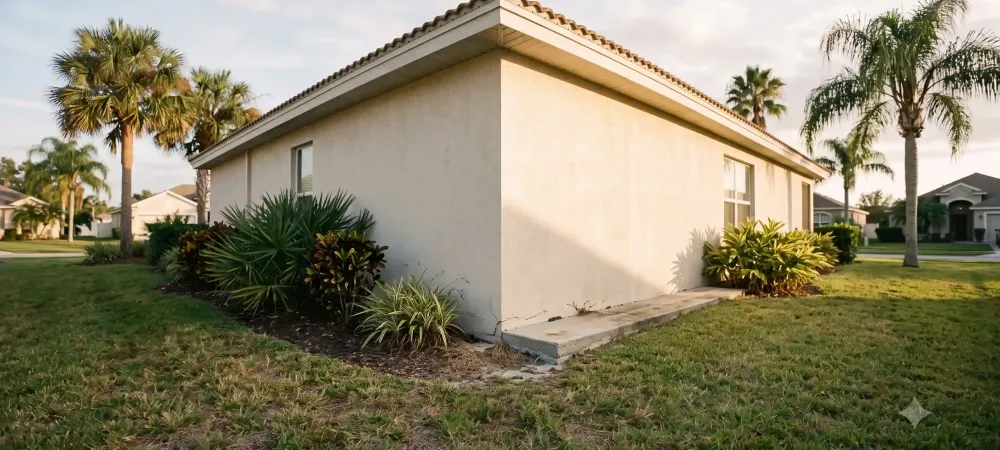
5 Signs You Have Termites in Your Central Florida Home
Quick Answer
The most reliable signs of termites in a Central Florida home are mud tubes along the foundation, small piles of pellet-shaped droppings called frass, discarded wings near windows or doors, wood that sounds hollow when tapped, and paint that bubbles or peels without an obvious moisture source. Which signs you see actually tells you something important: mud tubes point to subterranean termites, while frass points to drywood termites, and the two require different treatment approaches entirely. Catching any one of these signs early can be the difference between a straightforward treatment and a repair bill that runs into the thousands.
Why These Signs Matter More in Florida Than Almost Anywhere Else
Florida's warm, humid climate keeps termites active year-round, which means there's no real "off season" to relax during. The University of Florida's Institute of Food and Agricultural Sciences (UF/IFAS) identifies drywood termites and subterranean termites as the two termite groups Florida homeowners most commonly encounter, and both can cause significant structural damage long before a homeowner notices anything is wrong. Termite colonies often take years to build up to a size that causes visible damage, which is exactly why learning to spot early warning signs matters so much in this part of the state.
Subterranean and drywood termites don't just look different; they also behave differently. They behave differently, live in different parts of a structure, and leave behind completely different evidence, which is why the five signs below are grouped by what they actually tell you about which termite you're dealing with.
Mud Tubes: The Signature Sign of Subterranean Termites
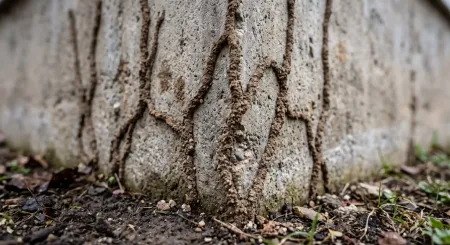
Mud tubes are thin, pencil-width tunnels made of soil, wood particles, and termite saliva that subterranean termites build to travel between the ground and a food source without drying out in open air. You'll typically find them running along a foundation wall, inside a garage, across a crawl space, or up an exterior wall where soil meets the structure. Subterranean termites live in the ground and can tunnel more than 100 feet from their colony to reach a house, which means a mud tube on your foundation doesn't necessarily mean the nest is anywhere close by.
If you find a mud tube, the simplest way to check whether it's still active is to break open a small section and look inside. Live subterranean termites are pale, soft-bodied, and about an eighth of an inch long, and an active tube will usually be repaired within a day or two if termites are still using it. An old, abandoned tube will often stay broken and dry out. Either way, a mud tube is worth a professional look, since subterranean termites are responsible for the majority of termite-related structural damage in Florida homes.
Frass: The Sign That Points to Drywood Termites Instead
Frass is the term for the small, pellet-shaped droppings that drywood termites push out of their tunnels through tiny openings called kick-out holes, which are roughly the size of a pen tip. According to UF/IFAS, drywood termite evidence includes six-sided pellets pushed out of the colony through these kickholes, and pest control professionals often describe the material as having a "sand-like" texture. Homeowners typically find small piles of frass on windowsills, along baseboards, on the tops of picture frames, or at the base of wooden furniture, since drywood termites live entirely inside the wood they're eating rather than traveling through soil.
This is where the two termite types really separate, and it's worth being direct about a common point of confusion: subterranean termites do not produce visible frass at all, since they push their waste into the mud tubes they build rather than out into the open. If you're seeing small piles of gritty, sand-like pellets rather than mud tunnels, you're most likely looking at a drywood termite problem, not a subterranean one, and that distinction changes what treatment will actually work.
Discarded Wings: A Sign That a Colony Has Already Arrived
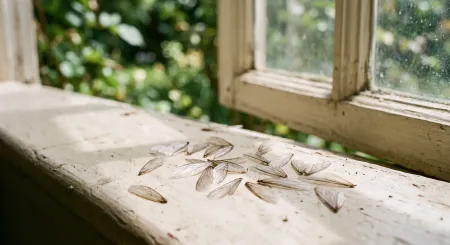
Winged termites, called swarmers, leave a mature colony in groups to start new colonies elsewhere, and after finding a new spot to settle, they shed their wings. Finding small, translucent, equal-length wings scattered near a windowsill, door frame, or light fixture is a strong sign that swarmers have already entered your home or landed nearby, even if you never saw the swarm itself happen.
A frequent point of confusion is mistaking termite swarmers for flying ants, since both show up around the same time of year and look similar from a distance. The real difference comes down to a few physical details: termite swarmers have a thick, straight waist with no pinch between the body sections and two pairs of wings that are equal in length, while flying ants have a distinctly pinched waist and front wings that are noticeably longer than their back wings. If you're not sure which one you're looking at, a clear photo or a small sample in a sealed bag is enough for a professional to identify for you, and it's worth doing before assuming either way.
Hollow Wood and Bubbling Paint: The Signs You Feel Before You See
Termites eat wood from the inside out, so a beam, baseboard, or door frame can look completely normal on the surface while being almost hollow underneath. Tapping suspected wood with a screwdriver handle and listening for a hollow or "papery" sound instead of a solid thud is a simple way to check an area that looks fine but feels off. Doors or windows that have started sticking can point to the same problem, since termite activity combined with moisture can cause wood to swell.
Paint that bubbles or peels without an obvious water leak nearby is a less commonly recognized sign, but it can point to moisture trapped behind the surface from termite activity in the wood underneath. None of these signs alone confirms an infestation, since normal humidity and aging materials cause similar symptoms. Together with any of the signs above, though, they're a good reason to schedule an inspection rather than wait and see.
What These Signs Mean for Your Treatment Options
The signs you find should shape the conversation you have with a pest control company, not just confirm that "you have termites" in general. Subterranean termite problems, marked by mud tubes, are typically addressed with soil-applied treatments or bait systems placed around the structure's perimeter, cutting off the colony's access point between ground and wood. Drywood termite problems, marked by frass and kick-out holes, are usually treated with either localized spot treatment for a contained infestation or full-structure fumigation for a larger colony. There's no single treatment for termites, which is exactly why an accurate inspection matters more than a fast guess.
Preventing Termite Activity Around Your Home
A handful of ongoing habits make a Central Florida property less inviting to both subterranean and drywood termites:
- Keep mulch, firewood, and dense landscaping at least a foot away from the foundation, since wood-to-soil contact is one of the easiest paths subterranean termites use to reach a structure
- Fix leaking faucets, gutters, and irrigation lines promptly, since excess moisture around the foundation and crawl space draws subterranean termites in
- Store firewood and lumber off the ground and away from the house, rather than stacked against an exterior wall
- Seal cracks in the foundation and around utility penetrations, which are common entry points for subterranean termites moving from soil to structure
- Check attics, window sills, and furniture periodically for small piles of frass, especially in older homes or ones with a lot of exposed wood trim
When to Call Bush Home Services
Any one of the signs above is a good reason to schedule an inspection rather than waiting for your next annual check. Mud tubes, frass, discarded wings, hollow wood, or bubbling paint can all indicate an active infestation that's been building for some time, since termite damage often goes unnoticed for years before it becomes visible. Bush Home Services provides termite inspections, targeted treatment, and ongoing monitoring built around the specific signs you're seeing, whether that points to a subterranean colony working through your foundation or a drywood colony established inside your attic framing.
Don't Wait for the Damage to Confirm It for You
Termites rarely announce themselves clearly, which is exactly why learning these five signs is worth the few minutes it takes. A mud tube, a small pile of frass, or a pile of discarded wings near a window are all small clues pointing to a much bigger problem happening out of sight. If you've spotted any of these signs around your home, or you're just not sure what you're looking at, call Bush Home Services at 352-621-7700, and we'll help you figure out what's really going on.
Sources
- Oi, Faith. "Termite Prevention and Control." Ask IFAS, University of Florida Institute of Food and Agricultural Sciences, ask.ifas.ufl.edu/publication/IN1277.
- "Homeowner's Guide to Selecting a Pest Control Service." Ask IFAS, University of Florida Institute of Food and Agricultural Sciences, ask.ifas.ufl.edu/publication/IN1269.
- National Pest Management Association. "Termites Eat Right Through American Homes and Most Owners Won't See It Coming." PR Newswire, 2 Mar. 2026, www.prnewswire.com/news-releases/termites-eat-right-through-american-homes-and-most-owners-wont-see-it-coming-302701080.html.